



Running has become one of the most popular forms of exercise on the planet — and for good reason. It costs nothing, requires no equipment, and you can do it anywhere. But one piece of gear divides the running community more than any other: HEADPHONES.
Most runners want music. The problem is that most headphones make running less safe. Here’s why bone conduction headphones are the answer — and why more and more serious runners are making the switch.
WHY AWARENESS MATTERS MORE THAN MOST RUNNERS THINK
Every year, runners are injured by vehicles, cyclists, and other hazards they simply didn’t hear coming. The issue isn’t carelessness — it’s the headphones. Traditional in-ear earbuds physically block your ear canal. Even at moderate volume, they create a bubble that cuts you off from the world around you.
Many brands try to solve this with “open-ear” designs — clip-on or ear-hook styles that claim to keep your hearing intact. In practice, most of these still sit close enough to the ear canal to muffle environmental sound. They’re a compromise, not a solution.
True situational awareness while listening to music requires a fundamentally different approach. That’s exactly what bone conduction technology delivers.
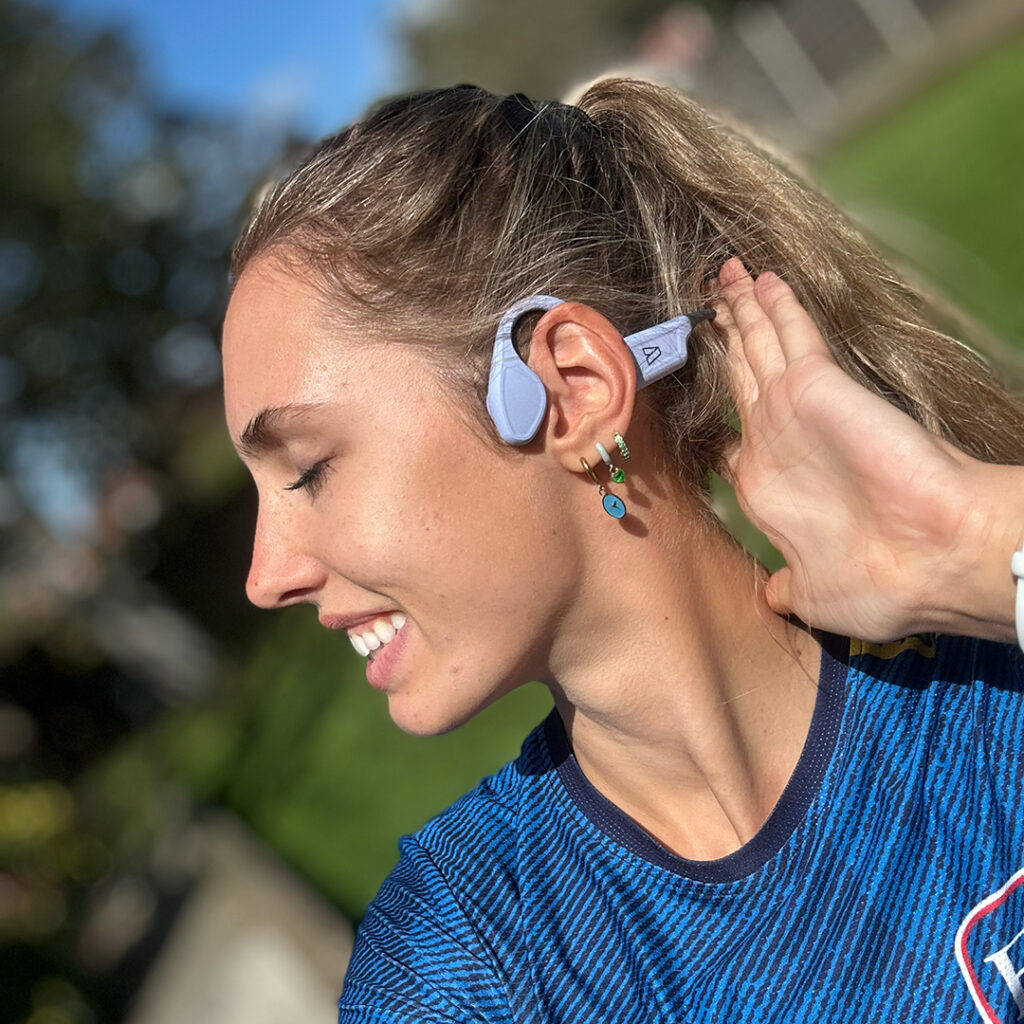
HOW BONE CONDUCTION WORKS
Bone conduction headphones don’t send sound through your ear canal at all. Instead, they sit on your cheekbones, just in front of your ears, and transmit sound vibrations directly to your inner ear through bone and tissue.
The result: your ear canal stays completely open. You hear your music clearly. You also hear everything around you — traffic, approaching cyclists, other runners, warning shouts — with full acoustic clarity.
This isn’t a workaround. It’s the only audio technology that genuinely guarantees both your soundtrack and your safety at the same time.
WHY AMPACT SPRINTER 100 IS BUILT FOR RUNNERS
At Ampact, we built the Sprinter 100 because we’re athletes ourselves — and we couldn’t find a bone conduction headphone that actually kept up with serious training. Here’s what makes it different:
IPX8 WATERPROOF — TRULY NON-NEGOTIABLE
Most headphones are rated IPX4 or IPX5 — that means sweat and light rain resistance. For runners who train in all conditions, that’s not enough. The Sprinter 100 is rated IPX8, meaning it handles full submersion. Torrential rain during a marathon, muddy trail splashes, heavy sweating — zero worries. This also means the Sprinter 100 transitions seamlessly from the road to the pool — ideal for triathletes or runners who swim as cross-training.
If you run seriously, don’t settle for less than IPX8.
SECURE FIT THAT DISAPPEARS
The ultra-light frame and medical-grade silicone construction means the Sprinter 100 stays put through every stride without chafing or pressure points. Once it’s on, you stop noticing it’s there — which is exactly how it should feel on a long run.
OPEN EAR, FULL AWARENESS
Unlike any earbud or traditional headphone, the Sprinter 100 leaves your ears completely free. You hear your coach, your training partner, a car pulling out, or a dog off the lead — while your playlist keeps playing.

THE BOTTOM LINE
Most runners don’t realise the difference until they try bone conduction for the first time. The combination of open-ear awareness, IPX8 waterproofing, and a secure fit that holds through every stride changes the experience of running with audio entirely. You stop managing your headphones and start focusing on your run.
Whether you’re running city streets, forest trails, track intervals, or a full marathon — your headphones should never compromise your safety. Bone conduction is the only technology that lets you have both: the music and the awareness.
The Ampact Sprinter 100 is built for the runner who refuses to compromise on either.
Ready to run safer and smarter? Shop the AMPACT SPRINTER 100 now!