

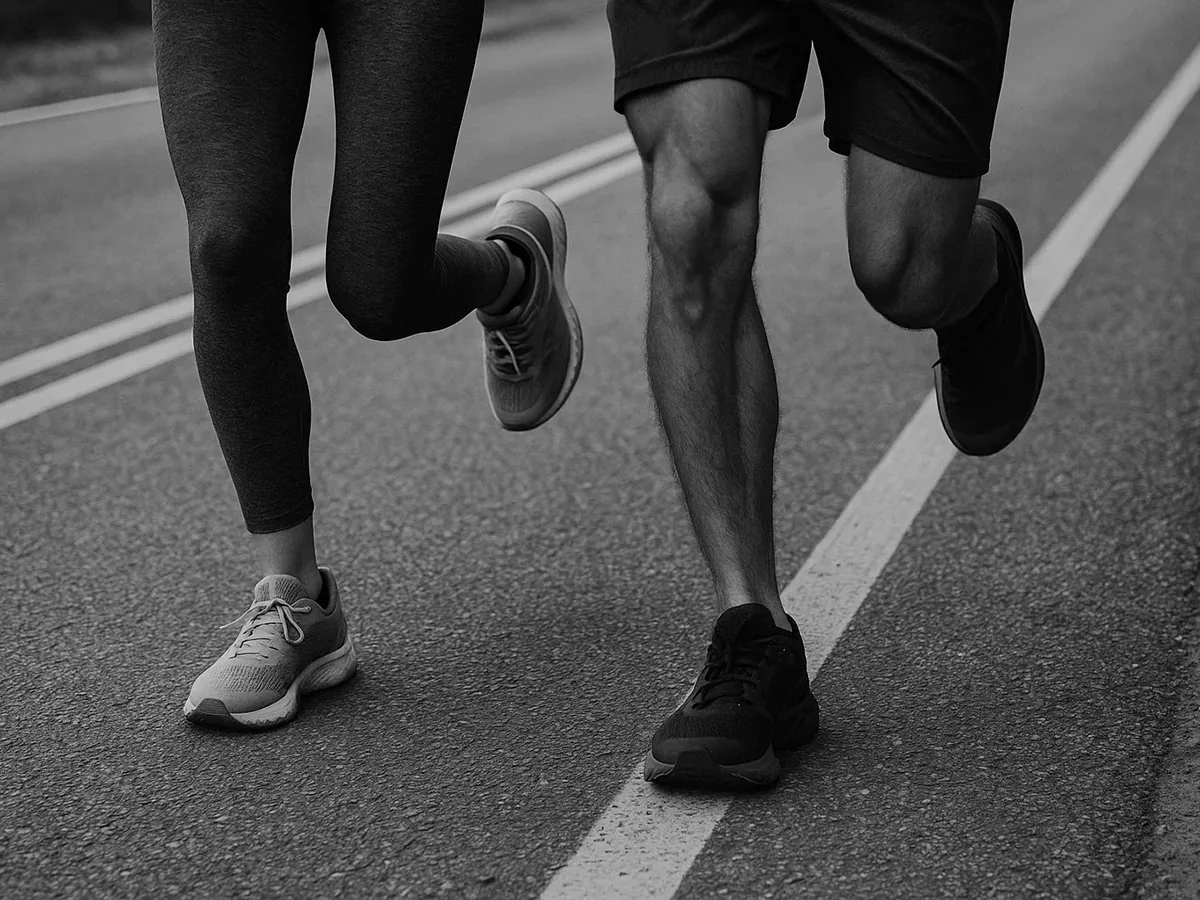

There are sessions where everything clicks. Your breathing is even, your movement feels effortless, time distorts — an hour passes in what feels like twenty minutes. Athletes call it being in the zone. Psychologist Mihaly Csikszentmihalyi called it flow.
Flow is defined as the mental state of complete immersion in an activity — where the challenge and your skill are perfectly matched, the task demands your full attention, and the experience itself becomes the reward. Csikszentmihalyi described it as the state where “nothing else seems to matter” — not because you’re ignoring the world, but because you’ve found the exact right relationship with what you’re doing.
Understanding how to reliably access flow is one of the most underrated performance tools in an athlete’s toolkit.
WHY EXERCISE IS ONE OF THE BEST FLOW TRIGGERS
Flow requires a specific set of conditions: a clear goal, immediate feedback on your performance, and a balance between challenge and skill. Exercise delivers all three naturally.
A running interval session gives you a target pace and instant feedback through your breath, body, and watch. A swim set gives you the wall at the end of each length and the clock overhead. A heavy lifting session gives you the weight, the rep count, and the sensation of the movement itself. Every workout contains the raw ingredients for flow — the question is whether you can remove the obstacles that prevent it.
THE ROLE OF AEROBIC EXERCISE SPECIFICALLY
High-intensity aerobic exercise — running, cycling, swimming, rowing — creates particularly favourable conditions for flow. The physical demand requires focus, the rhythm of sustained effort creates a meditative quality, and the neurochemical environment supports it.
Exercise triggers the release of dopamine, endorphins, and norepinephrine — all of which contribute to the focused, motivated, slightly euphoric mental state that characterises flow. The physical challenge and the neurochemical response create a feedback loop that can carry you into deep immersion for extended periods.
Swimmers often report this more acutely than other athletes — the sensory reduction of being underwater, combined with the rhythm of strokes and breathing, creates an environment that’s almost designed for flow.
HOW TO APPLY FLOW PRINCIPLES TO YOUR TRAINING
SET CLEAR, SPECIFIC GOALS FOR EACH SESSION
Vague intentions don’t create flow. “Going for a run” is less effective than “completing 6x800m at target pace with 90-second recovery.” The more specific the goal, the more clearly your attention has something to lock onto.
BALANCE CHALLENGE AND SKILL
Flow lives in the space between too easy and too hard. If every session is a comfortable jog, you won’t get there. If every session leaves you destroyed, you won’t stay there. Structured progression — workouts that push you just beyond your current level — is the sweet spot.
ELIMINATE DISTRACTIONS
Just as you’d minimise interruptions in a deep work session, the training environment matters. This is where audio becomes relevant. The right music — matched to the session, at the right volume — can support flow by filling the mental space that distracting thoughts would otherwise occupy. The wrong audio experience (fiddling with a phone that won’t stay dry, earbuds falling out mid-set) actively breaks it.
ALLOW FOR RECOVERY
Flow isn’t a state you can force. It also isn’t sustainable indefinitely. Adequate recovery between sessions — sleep, nutrition, easy days — means you arrive at the sessions that matter with the physiological and psychological resources to access deep focus.
THE AUDIO ENVIRONMENT AND FLOW
This is something we think about a lot at Ampact. The right music can support the transition into flow. It fills the cognitive background, reduces the intrusion of extraneous thought, and provides rhythm that supports movement efficiency.
But headphones that fall out, require phone management, or force you to surface from the pool to change a track actively work against the immersion you’re trying to build. The design of the Sprinter 100 — secure fit, 8GB onboard MP3 storage, IPX8 waterproof, open-ear for awareness — is built around removing every audio-related interruption from your training environment.
Flow is easier when the gear disappears. And that’s what we’re building toward.